

Touchscreen Operator Interface ESD Qualification to MIL-STD-461G CS118

Preventing ESD-Induced Display Failures Before Qualification Testing
Modern aerospace platforms increasingly rely on touchscreen-based touchscreen operator interfaces for operator interaction.
From maintenance terminals and portable aerospace electronics to integrated touchscreen operator interface systems, touch-enabled interfaces have become a primary control point between personnel and critical electronic systems.
Because these surfaces are repeatedly touched during operation, they also represent one of the most common entry points for electrostatic discharge (ESD).
For aerospace manufacturers, validating immunity to personnel-borne electrostatic discharge is now a critical part of system qualification.
Why Touchscreen Operator Interfaces Are a High-Risk ESD Location
Unlike internal electronics, touchscreen operator interfaces are directly exposed to operators throughout their service life. Electrostatic charge can accumulate through: Protective clothing, Synthetic materials, Maintenance activities, and Low-humidity operating environments.
When contact occurs, ESD energy may couple into the system through: Touchscreen surfaces, Display bezels, Control buttons, Data ports, and Maintenance connectors.
Even when permanent damage does not occur, transient disturbances can cause: Display freezing, Touchscreen response errors, Software instability, Communication interruptions, and Unexpected system resets. For systems requiring continuous operation, these events can become qualification concerns.
MIL-STD-461G CS118 Requirements
MIL-STD-461G CS118 was introduced to verify the ability of electronic equipment to withstand Personnel Borne Electrostatic Discharge (PBESD) while operating normally. The standard specifically applies to electrical and electronic equipment with human-machine interfaces. It is intended to evaluate the effects of electrostatic discharge occurring during normal operator interaction.
The test utilizes:
- 150 pF charging capacitance
- 330 Ω discharge resistance
- Contact discharge testing
- Air discharge testing
- Test levels from ±2 kV to ±15 kV
The Equipment Under Test (EUT) must continue operating without unacceptable degradation during and after ESD exposure.
Application Example: Touchscreen Operator Interface Qualification
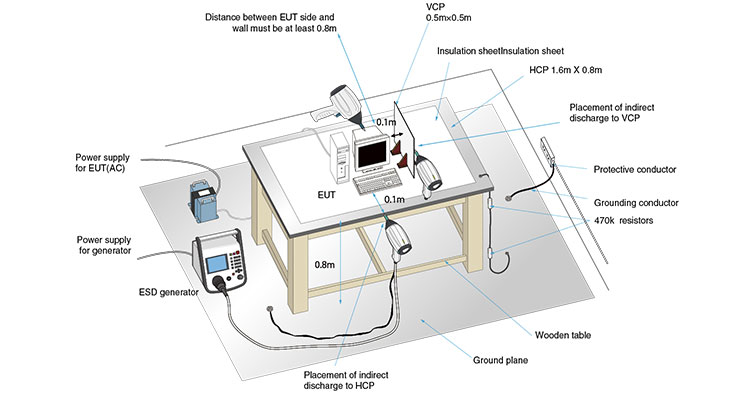
Consider a Touchscreen Operator Interface undergoing development for aerospace deployment. During CS118 testing, discharges are applied to: Display surfaces, Metal bezels, User controls, Maintenance interfaces, and Connector access points. The system remains fully operational throughout testing while engineers monitor: Display functionality, Touch input performance, Software operation, Data communications, and System status. Because many ESD-related issues appear only during powered operation, repeatable testing is essential throughout development.

Why Development Teams Perform ESD Testing Before Formal Qualification
Many CS118 failures originate from issues that are difficult to identify through conventional functional testing.
- Grounding Path Problems
Discharge current may enter sensitive circuitry instead of returning safely to chassis ground. - Display Assembly Coupling
Large display structures can unintentionally couple ESD energy into processors and communication circuits. - Software Susceptibility
Transient disturbances may trigger operational anomalies without causing permanent hardware damage. - Interface Design Changes
Late-stage modifications to display assemblies can introduce new ESD vulnerabilities. Finding these issues during qualification testing often leads to schedule delays and redesign costs. As a result, many aerospace manufacturers perform ESD validation throughout product development rather than waiting for final compliance testing.
Supporting Early-Stage
ESD Evaluation
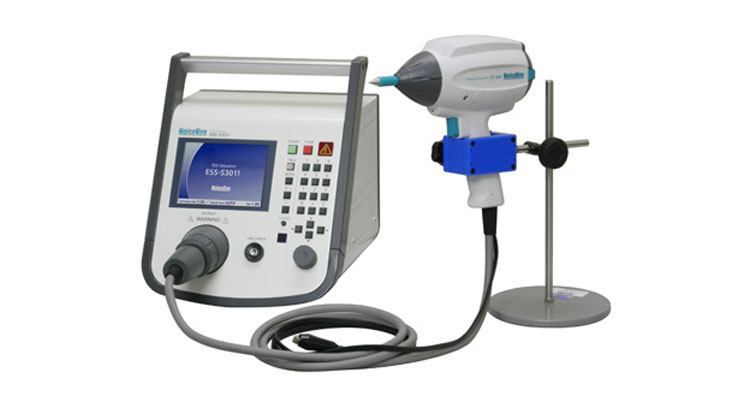
Development teams often begin by evaluating interface robustness, grounding strategies, shielding effectiveness, and discharge paths before formal qualification testing begins. For these activities, flexible ESD simulation tools are commonly used to investigate failure mechanisms and verify corrective actions. We provide ESD testing solutions used for development, troubleshooting, failure analysis, and pre-compliance evaluation across a wide range of aerospace and high-reliability electronic applications.
Preparing for MIL-STD-461G CS118 Compliance Testing
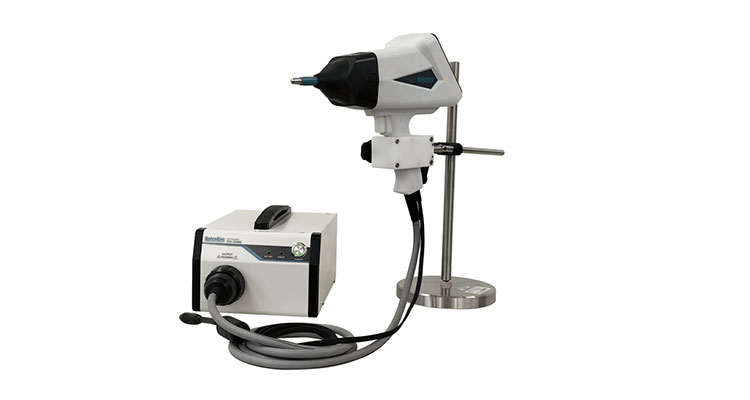
As qualification approaches, repeatability becomes increasingly important. Engineering teams must often perform hundreds of discharges across multiple test locations while documenting system behavior and validating corrective design changes. For MIL-STD-461G CS118 and IEC 61000-4-2 applications, the ability to generate stable and repeatable discharge waveforms helps reduce uncertainty during compliance preparation. The ESS-PS1 supports repeatable ESD immunity testing for aerospace and defense electronic systems, helping engineering teams evaluate touchscreen operator interfaces, operator interfaces, maintenance terminals, and other human-accessible electronic assemblies throughout development and qualification.
Example of Test Setup